Gaming Startup Blunders: Avoid These Ill-Fated Ventures
Uncover the harsh truths behind 2025's startup ideas with a brutally honest analysis. Find out what to avoid and how to pivot for success.
Most Startup Ideas in 2025 Solve Problems That Don’t Exist
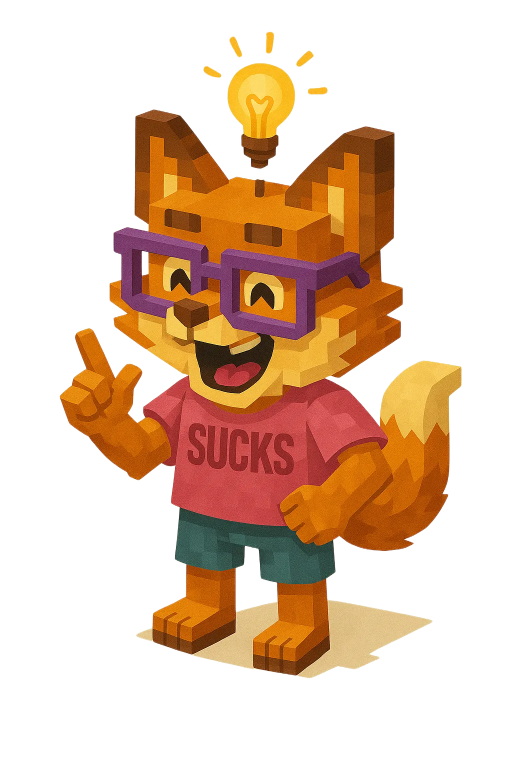 Imagine a world where every innovation is a solution to a non-existent problem. Welcome to the startup scene of 2025. Today, we’re diving into 21 ideas that epitomize this trend, highlighting the ten worst offenders. These aren’t just harmless daydreams: they’re potential money pits that entrepreneurs pour their souls into, only to realize they’ve built a bridge to nowhere.
Sure, some ideas sound genius in the echo chamber of a founder’s mind, but when they hit the real world, they crash harder than a lead balloon. Strap in as Roasty the Fox takes you through a tour of what not to build in 2025. From delusions of grandeur in proptech to misplaced ambitions in gaming, these ideas epitomize the chasm between brilliance and practicality.
| Startup Name | The Flaw | Roast Score | The Pivot |
|---|---|---|---|
| An app that advertises all houses for sale within a 4-kilometer radius | A Zillow feature masquerading as innovation | 26/100 | Focus on pre-market listings |
| SDK for accessibility in board games | Feature, not a business | 68/100 | Universal SDK for online games |
| Video game for hearing-impaired players | Accessibility feature in search of a studio | 54/100 | Build an SDK for accessibility |
| Tech for physical card games | Kickstarter campaign disguised as a startup | 48/100 | Platform for accessible gaming |
| SignalPlay: Inclusive tabletop gaming | Niche market and weak revenue model | 77/100 | Partnerships with game publishers |
| Smart chess for dementia patients | Feature for toy companies, not a startup | 46/100 | Tablet-based cognitive games suite |
| NeuroPlay: High-stim social deduction game | Niche within a niche with high risk | 78/100 | Ship MVP and test retention |
| Accessibility in interactive games | Science fair project, not scalable | 62/100 | Platform-agnostic software approach |
| TE FODEEE | No idea, just noise | 1/100 | N/A |
| hugozão | Keyboard accident | 1/100 | Clarify and develop the idea |
The 'Nice-to-Have' Trap
O projeto proposes an SDK for accessibility in board games
This idea, simply put, wants to be the hero of accessibility in digital board games. But let's get real: an SDK for accessibility is like selling a paperclip in the age of digital signatures. This is a feature, not a product. It scored a fair 68/100, but the execution will be harder than trying to play Monopoly with all the rules in Lojban.
The creators have a heart of gold but a business of paper. Their suggested pivot: expand to a universal accessibility SDK for all online games, not just board games, is a good start. But only if they can sell it to bigger fish like Unity or Roll20. Otherwise, they're just another bright-eyed startup swimming upstream with weights tied to their fins.
If your product is something users don't know they need yet, you'd better have the marketing budget of a small nation. Until then, focus on larger partnerships and broader market appeal.
Why Ambition Won't Save a Bad Revenue Model
An app that advertises all houses for sale within a 4-kilometer radius
A 26/100 score isn’t just a red flag: it’s the universe telling you to pivot. The idea of advertising houses within a 4-kilometer radius sounds intriguing until you realize it’s basically just a Zillow filter with a smaller compass.
Real estate agents won’t pay, users won’t switch, and Google Maps has been doing this for years. The takeaway? You can't charge for a feature that's already free elsewhere. The suggested pivot here is to dive into the data trenches: focus on surfacing hidden or pre-market listings.
The Compliance Moat: Boring, But Profitable
The Devil's Advocate: Product Manager Tool
Finally, a B2B SaaS that isn’t trying to be another Slack clone. This tool is a rare PM's tool that roasts products into shape instead of coddling them. With a score of 88/100, it shuns hand-holding in favor of adversarial audits, bias detection, and red flag reporting.
The idea’s backbone is more solid than a caffeine-fueled coder during a hackathon. It trades clunky dashboards for actionable insights, just the kind PMs need to avoid embarrassing, career-ending blunders. The real insight? Boring compliance tools can be gold mines if they prevent costly mistakes.
The Fix Framework
- The Metric to Watch: Churn rate of PMs using the product
- The Feature to Cut: Over-reliance on niche compliance frameworks
- The One Thing to Build: A seamless integration with popular task management tools
Deep Dive Case Studies - Blunt Verdicts
SignalPlay: Inclusive Tabletop Gaming
The beauty of SignalPlay lies in its simplicity: translating audio-dependent gameplay interactions into visual and tactile signals. It isn’t just a token nod to accessibility: it’s a genuine attempt to level the playing field. A 77/100 score recognizes this as a mission-driven product, albeit one challenged by a niche market.
The key here is partnerships with major tabletop game publishers. Go beyond the virtue signal and ensure it’s more than just a side project. If you’re all about inclusion but can’t crack the market, you’re just shouting into the void.
The Fix Framework
- The Metric to Watch: Player retention rates post-launch
- The Feature to Cut: Overly complex customization options
- The One Thing to Build: Strategic partnerships with large game nights and events
A Head-Mounted IMU Controller for Tetraplegia
Here's an idea that scored 89/100 for the right reasons. Addressing a real gap, social isolation for tetraplegia sufferers, this is one of the few hardware ideas that isn’t destined for a dusty shelf.
The beauty of this idea is its simplicity: translating head movements into game actions. While revenue models need work, the core innovation is solid. The takeaway? If your hardware is addressing a real need, you’re already halfway to success.
The Fix Framework
- The Metric to Watch: User satisfaction and independence levels
- The Feature to Cut: Complex gesture sets
- The One Thing to Build: Integration with more games and activities beyond Battleship
Pattern Analysis
Looking across these ideas, we're seeing a sea of misguided ventures trying to solve non-problems. But not all hope is lost. Those ideas that focus on genuine issues, like accessibility and social isolation, tend to stand out. They may not offer the quickest returns, but they provide value where it's needed most.
The lesson? When in doubt, solve a real problem. Look for areas where current solutions are failing or non-existent and double down on those niches. If your idea sounds like a minor feature on a major platform, it's time to rethink your approach.
Category-Specific Insights
Gaming and Entertainment
This category is rife with confusion, with entrepreneurs pandering to niche markets without clear monetization strategies. Whether it's video games for hearing-impaired players or adaptor kits for tabletop games, the common denominator is a lack of clear business models.
The advice? Focus on universal accessibility solutions that appeal to a broader audience and have real-world applications, rather than getting stuck in a niche.
Actionable Takeaways - Red Flags
- Don't build features that can be snapped onto existing platforms. If Zillow can do it, so can you. But make sure it's something Zillow doesn't want to do.
- Passion isn’t enough: user adoption is king. Make sure there’s an audience, willing to switch or pay, before you commit.
- Accessibility needs to be more than a checkbox. Look at real user needs and develop comprehensive solutions that genuinely level the playing field.
- Hardware is a tough game: ensure the pain is real and the market is underserved. Otherwise, you're setting yourself up for a logistical nightmare.
- Your idea is a pivot unless it addresses an unmet need. Look at the market, talk to potential users, and then build.
Conclusion - Blunt Directive
If 2025’s startup landscape teaches us anything, it's that solving real problems trumps innovation for innovation's sake. Don't just add to the noise with another 'unique' feature: give users something they genuinely need. If you're not saving someone time or money, or aren't addressing a significant issue, it's time to go back to the drawing board.
Written by David Arnoux.
Connect with them on LinkedIn: Check LinkedIn Profile
Want Your Startup Idea Roasted Next?
Reading about brutal honesty is one thing. Experiencing it is another.