Why These 15 Gaming Startup Ideas Might Not Make It Big
Brutal analysis of startup trends reveals what to build and what to avoid in 2025. Honest insights from 15 real startup failures and successes.
Stop building these 15 types of startup ideas. We analyzed them, scored them, and 53% scored below 50/100. Here's why they'll fail.
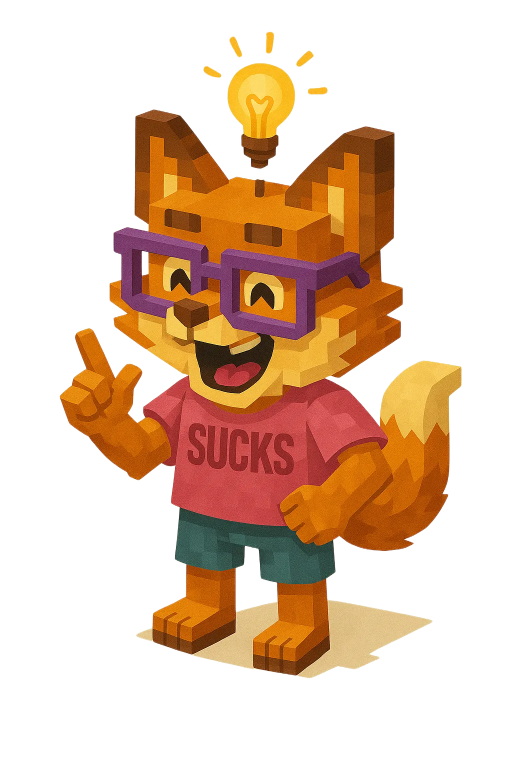 In the world of startups, every founder believes their idea is the next big thing. But here's a brutal truth from your friendly critic, Roasty the Fox: most startup ideas are just profitable illusions. You might have a shiny concept in mind, but without the grit of reality, it will likely fall apart faster than a house of cards in a gust of wind. We delved into 15 startup ideas, picked them apart, and guess what? Over half of them scored below 50 out of 100. That's right, folks: these ideas are skating on thin ice. So, what did we find? A lot of ambition without function, and dreams without execution.
In this roast, I’ll guide you through the pitfalls, the false hopes, and the tiny glimmers of potential some of these ideas hold. It's time to cut through the nonsense and get to the heart of why these ideas won't just burn out, they'll implode. If you’re not solving a real, costly problem, you’re just wasting your time and someone else’s money. Here's the breakdown of what not to build and the hard realities behind these startups.
| Startup Name | The Flaw | Roast Score | The Pivot |
|---|---|---|---|
| Musical Memory | Feature, not a startup | 49/100 | Build a SaaS-enabled platform for care facilities |
| Physical Kit for Hearing Impaired | Hardware graveyard alert | 51/100 | Ditch the hardware |
| Dyslexia Board Game | Jumble of parts, no inclusion | 38/100 | Focus on co-design with educators |
| Sonorium | Overengineered, niche market | 59/100 | Strip it down to a single tool |
| Micro SaaS for Google Ads | Feature graveyard, not a startup | 54/100 | Automate a specific pain |
| Accessible Ludo Game | Noble intent, zero business | 47/100 | Open-source the controller |
| Accessible Social Deduction Game | Academic hardware, not a startup | 54/100 | Build a cross-platform SDK |
| Blind-Accessible FPS | Fun project, DOA as a startup | 38/100 | Open-source audio game engine |
| Inclusive Board Game | Feature, not a company | 48/100 | Build a modular toolkit |
| Modular Tactile Game Platform | Capstone project, not a business | 57/100 | Focus on a single use-case |
The 'Nice-to-Have' Trap
Here's a truth not everyone wants to hear: If your startup idea doesn't solve a problem that's keeping someone up at night, you might as well be peddling ice to Eskimos. Take Musical Memory, for instance. A physical cognitive game that scored a meager 49/100, it's a feature disguised as a business. What are you really offering here, other than a personalized twist on grandma's memory cards? It's adorable that you're avoiding the app route, but that barrier to entry is also your Achilles' heel. Without a unique, defensible angle, you're stuck competing with bargain-bin games at Walmart.
Then there's the Accessible Ludo Game, which is as noble as it is doomed. Sure, it's inclusive, a game for people with tetraplegia inspired by Ludo. But unless you've got a direct line to every school and therapy center, this isn't a business, it's a love letter to accessibility with no ROI in sight. The market is tiny, the costs are high, and at best, you're creating a tool, not a business.
The Fix Framework for Musical Memory:
- The Metric to Watch: If distribution costs exceed $5 per unit, rethink your channel.
- The Feature to Cut: Remove the personalization option until you've scaled.
- The One Thing to Build: Create a B2B2C platform for care facilities with tracking features.
Why Ambition Won't Save a Bad Revenue Model
Ambition is admirable, but remember: it won't save you when your revenue model is as shaky as a Jenga tower in an earthquake. The Micro SaaS for Google Ads is a graveyard of good intentions. With a score of 54/100, it’s caught in a hamster wheel of tiny ARPU and churny users. The world doesn’t need another tool that does what 10 others already can, nor do agencies have room for yet another app cluttering their toolkits.
Look at Accessible Board Game for Dyslexia next. With a score of 56/100, it's a heartfelt attempt to use culture-inspired play for inclusion. But without solid monetization, it's more likely to be a Kickstarter passion project than a serious venture. You can't build a company on hope and cultural nods alone.
The Fix Framework for Micro Saas:
- The Metric to Watch: If your monthly churn rate is above 5%, you've got a leaky bucket.
- The Feature to Cut: Ditch anything that isn’t directly improving click-through rates.
- The One Thing to Build: Automate a specific pain like broken tracking for e-commerce.
The Compliance Moat: Boring, but Profitable
Let's talk about the Sonorium. With a score of 59/100, it's as ambitious as your college thesis, and that's exactly its downfall. Overengineered and playing to a niche market, it showcases an array of sensory features that would baffle even seasoned PMs. It’s a sensory symphony, but who are you selling the performance to? VI children's gaming market is niche, and getting schools or parents to buy into a complex, high-cost product is wishful thinking.
Meanwhile, Inclusive Board Game with LEDs is another complex addition to a simple problem, with a score of 48/100. You've got the heart but not the market insight. Schools? Parents? They aren’t lining up for LED-enhanced board games, trust me.
The Fix Framework for Sonorium:
- The Metric to Watch: If your production cost per unit exceeds $50, strip down.
- The Feature to Cut: Get rid of any unnecessary sensors.
- The One Thing to Build: Focus on a single educational application that scales.
The Hardware Graveyard
We've all seen the hardware startup corpses scattered along the roadside, so don't let your dream be the next. The Physical Kit for Hearing Impaired sits on the edge, scoring 51/100. The goal is worthy, but you've chosen the slowest, least scalable route, bespoke hardware for a niche audience. When hardware is a graveyard for indie projects, why dig your own spot?
The Blind-Accessible FPS scores a dismal 38/100. Sure, it’s original, but a business it is not. Who’s going to fund a bespoke arcade rig for blind children?
The Fix Framework for Physical Kit:
- The Metric to Watch: If your time-to-market exceeds 12 months, course correct.
- The Feature to Cut: Eliminate all non-essential hardware components.
- The One Thing to Build: Move to a software-first model with partner integrations.
Pattern Analysis
Going through the pile of ashes from these failed ideas, some common themes rise like a phoenix, but trust me, they won’t save you unless you heed the warnings. Half-baked Revenue Models are the bane of many a startup dream. So many ideas were set up to fail just because nobody thought through how they’d actually make money. It's all well and good to have a vision, but if you can't monetize it, you're just playing business.
Over-Complexity is another killer. From unnecessary hardware to over-engineered features, these startups forgot the KISS principle: Keep It Simple, Stupid. Complexity is alluring but often deadly.
And finally, Misguided Market Assumptions. If your idea hinges on a market that isn’t there, no pivot will save you. Dive deep into market research before you even think about your first prototype.
Actionable Takeaways
Don’t Confuse Innovation with Complexity: Musical Memory and friends, you’re not inventing the wheel, just complicating it.
If Your Idea Doesn’t Solve a Burning Problem, Burn the Idea: Look at anything that scored below 50 for a lesson.
Avoid the Hardware Trap unless You’re Intel: Sonorium and Physical Kit, you heard me.
Have a Business Model before a Business Card: If you can't say how you’ll make money, neither can anyone else.
KISS: Keep It Simple, Stupid. If your pitch requires a whiteboard, you need to tone it down.
Conclusion
2025 doesn't need more novelty for novelty's sake. It needs startups solving expensive, painful problems. If your idea isn't shaving off significant time or money, file it under 'Do Not Pursue'. The world has enough half-baked dreams, be the one who builds solutions that matter.
Written by Walid Boulanouar.
Connect with them on LinkedIn: Check LinkedIn Profile
Want Your Startup Idea Roasted Next?
Reading about brutal honesty is one thing. Experiencing it is another.