Gaming Startups Bound to Flop: What's Holding Them Back
Brutal analysis of startup trends reveals what to build (and what to kill) in 2026. Data-driven insights from carefully analyzed startup ideas.
 Stop building these 20 types of startup ideas. We analyzed them, scored them, and 40% scored below 50/100. Here's why they'll fail.
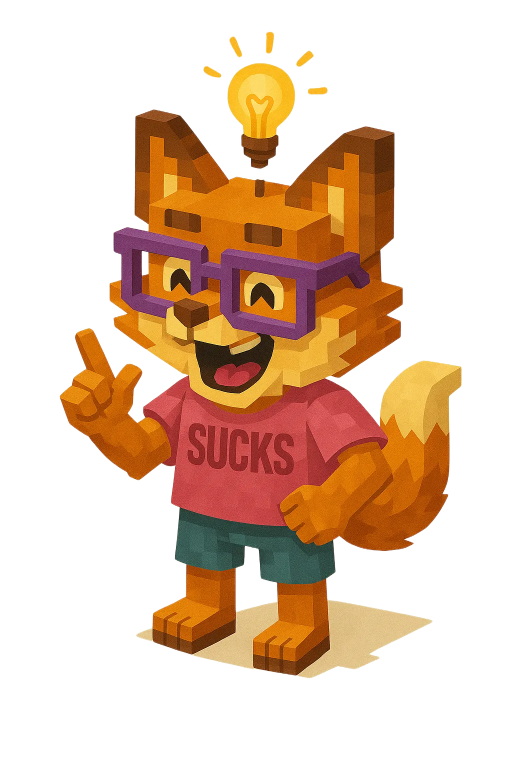
Imagine a fox, sharp-eyed and witty, who's been down every startup rabbit hole and emerged to tell the tale: that's me, Roasty the Fox. I've pored over stacks of startup ideas, spotting the familiar pitfalls and the occasional spark of genius that can actually be kindled into a business. Yet, here we stand on the brink of 2026, and I'm left wondering: why do so many founders still insist on building these doomed-to-fail ideas?
Let’s start with the glaring reality: most startup ideas are nothing more than expensive solutions to non-existent problems or glorified science fair projects. From tech-heavy board games that cater to microscopic markets, to accessibility tools that over-engineer their way to irrelevance, the landscape is littered with concepts that need a reality check. I've seen ideas like My Board Game Project score a pitiful 42/100 because it’s less of a business and more of a tech overload experiment.
Founders, it’s time to take off the rose-colored glasses. Out of the 20 ideas we’ll discuss today, nearly half linger in the “Roasted” tier, primarily because their creators have crafted elaborate solutions to problems that real customers barely recognize. Consider the language of the future before you build: are you serving an unmet need, or are you just fascinated by the possibilities of your own imagination?
Prepare yourselves: we’re diving deep into the data, slicing through the nonsense and revealing why most of these ideas should never have ventured beyond the brainstorming session. If you’re considering launching a startup in 2026, this might just save you a world of hurt.
| Startup Name | The Flaw | Roast Score | The Pivot |
|---|---|---|---|
| My Board Game Project | Tech overload, niche market, zero scale. | 42/100 | Ditch the hardware: go digital. |
| Visually Impaired Game | More charity than startup, tiny market. | 47/100 | Go digital, license to schools. |
| Ludo for Tetraplegia | Feature, not a business: zero scale. | 47/100 | Create an open-source input system. |
| Social Deduction Game | Academic, no business model. | 35/100 | Ditch Arduino, focus on software. |
| Dementia Card Game | Feels like a side project, low monetization. | 52/100 | Use AI for adaptive content. |
| Drillz | Feels like a Gong plugin. | 74/100 | Niche focus on a specific sales org type. |
| Procurement Autopilot | Execution risk is massive. | 87/100 | Prove savings, embed deeply. |
| Freehand Adaptive Drive | Not unicorn-scale, but useful. | 77/100 | Offer pre-assembled kits and support. |
| HCA-01 Sensory Logic | Hardware hell is looming. | 87/100 | Focus on clinical traction. |
| Haptic Feedback Prototype | Science project without scale. | 68/100 | Go software-first. |
The 'Nice-to-Have' Trap
Ah, the land of nice-to-haves, a place where ideas go to die quietly. It's where we've seen the likes of Silent Expedition with its novel approach to board games, scoring a 'Needs Work' 54/100, falter before they even start. This concept aims to solve a real issue: the exclusion of deaf players in social settings. Yet, it tries to tackle this with a board game mechanic, wholly unique but limited.
Red flags? The potential user base is minimal: few schools or families will invest in something they view as a niche novelty rather than an essential tool. Founders, your mission should be to deliver value that compels purchase, not a feature that piques momentary interest. If your product doesn’t scream necessity, it will only whisper into obscurity.
The Fix Framework:
- The Metric to Watch: If purchase intent remains below 20% in target user tests, refocus.
- The Feature to Cut: Drop the interactive board, focus on the core cooperative gameplay.
- The One Thing to Build: Develop a digital, browser-based version for remote play.
Tech Overload: The Hidden Cost
In the arena of high-tech board games, a prime offender is My Board Game Project. Scoring a dismal 42/100, it's a cautionary tale of technology layered upon technology, with no clear path to a sustainable market.
Here’s the deal: while technology can enhance play, it should never complicate it. When you’re using Arduino to manage turns in a board game, you’re not simplifying the user experience, you’re overcomplicating it.
The Fix Framework:
- The Metric to Watch: If production cost exceeds $30 per unit, it’s unfeasible.
- The Feature to Cut: Eliminate the digital die and use a simple app.
- The One Thing to Build: A streamlined digital experience that tests demand without the clutter of hardware.
Ambition Without Execution
Think you can outsmart the system with a half-baked idea? O Projeto scored a paltry 35/100, a victim of academic ambition without a shred of business execution. The insight into the exclusion of the deaf in social games is powerful, but without an actionable path to revenue, it remains a classroom theory.
It’s crucial to remember: ambition alone doesn't launch products. Execution is everything. Nail down user validation, build an MVP that can scale, or remain forever an untested hypothesis.
The Fix Framework:
- The Metric to Watch: Solve for product-market fit with 70% positive feedback from target users.
- The Feature to Cut: Drop the mandatory Arduino use.
- The One Thing to Build: Focus on developing a scalable software component.
Ignoring Market Size: The Fatal Flaw
One of the most common traps is underestimating the market size, as seen with Tic-Tac-Toe Inclusive Edition. With a mere 38/100, it highlights the issue with targeting too narrow a market or offering a product without a clear revenue stream. You’ve built a Tic-Tac-Toe board with tactile feedback for blind kids, but you’ve failed to demonstrate a viable business.
Without a substantial audience willing to purchase at scale, your startup is merely a fancy arts and crafts project.
The Fix Framework:
- The Metric to Watch: Validate demand by reaching interest from at least 100 institutions.
- The Feature to Cut: The audio feedback system should be optional.
- The One Thing to Build: A platform for a range of accessible games, not just Tic-Tac-Toe.
The Compliance Moat: Boring, but Profitable
We finally arrive at a beam of light in this murky labyrinth: Procurement Autopilot. It's scored an impressive 87/100 because it delivers a much-needed solution to a critical pain point in procurement for small SMEs.
This isn't just software, it's a lifeline to efficiency and savings for businesses that are otherwise swimming through a quagmire of paperwork and inefficiency. The real challenge? Execution. But if tackled with rigor, the opportunity remains vast.
The Fix Framework:
- The Metric to Watch: Monitor cost savings for initial users, target at least 20% savings reported.
- The Feature to Cut: Eliminate any unnecessary analytics features until basic functionality is flawless.
- The One Thing to Build: A robust integration feature that ties directly into existing accounting systems.
Pattern Analysis: Navigating the Terrain
Let's unpack what we've seen. Across these ideas, a few trends stand out starkly:
Overengineering Death Spiral: Ideas like My Board Game Project and VisualSense fell victim to tech bloat, losing sight of user simplicity.
Ignoring Market Imperatives: Ventures like Tic-Tac-Toe Inclusive Edition overestimate niche appeal without scaling or revenue plans.
The Power of Simplicity: Sometimes, a straightforward solution like Procurement Autopilot offers the clearest path to value and profitability.
The unifying theme? Complexity without customer value is a death sentence. If tech, revenue model, and user acceptance don't align, your idea is already in trouble.
Category-Specific Insights
Gaming and Entertainment
In gaming, many projects confuse novelty with value. It’s not just about having an interactive element; it’s about enhancing the core experience without alienating the traditional mechanics or audience. The crucial part many miss is market demand for accessibility combined with engaging mechanics.
Hardware and IoT
For hardware, simplicity and user-friendliness are key. Adaptations and integrations are great, but they must reduce friction, not add to it. A working prototype is impressive, but only if it meets a genuine need within a viable business model.
Health and Wellness
Solutions targeting health, like HCA-01 Sensory Logic have the potential to disrupt, but execution is the clincher. Validation through clinical data is an absolute must for staying power and scaling.
Actionable Takeaways: Red Flags to Watch
- If your user base can be counted on one hand, you’re in trouble: Confirm scalability beyond initial enthusiasm.
- Tech overload is not a feature: Simplify to enhance, not clutter the user experience.
- Passion projects rarely pay bills: Ensure there’s a path to consistent revenue.
- Market validation is king: If you haven’t talked to your potential customers, start now.
- Simplicity sells: Complex doesn’t always mean better.
- Integration with existing solutions can make or break your idea: Know your ecosystem.
- Execution is everything: Ideas are cheap, execution is where value is built.
Conclusion: Don’t Fall in Love with Your Idea
Here’s the blunt truth: 2026 doesn't need more tech experiments or quirky solutions to niche problems. It needs startups that solve real, tangible issues people face daily. If your idea doesn’t meet that standard, don’t build it.
2025 doesn't need more 'AI-powered' wrappers. It needs solutions for messy, expensive problems. If your idea isn't saving someone $10k or 10 hours a week, don’t build it.
Written by David Arnoux.
Connect with them on LinkedIn: Check LinkedIn Profile
Want Your Startup Idea Roasted Next?
Reading about brutal honesty is one thing. Experiencing it is another.