Startup Scorecard: Grading Entertainment Concepts of 2023
Data-driven analysis of 17 startup ideas reveals shocking insights into what to build or kill. Discover hard truths and actionable pivots from real-world data.
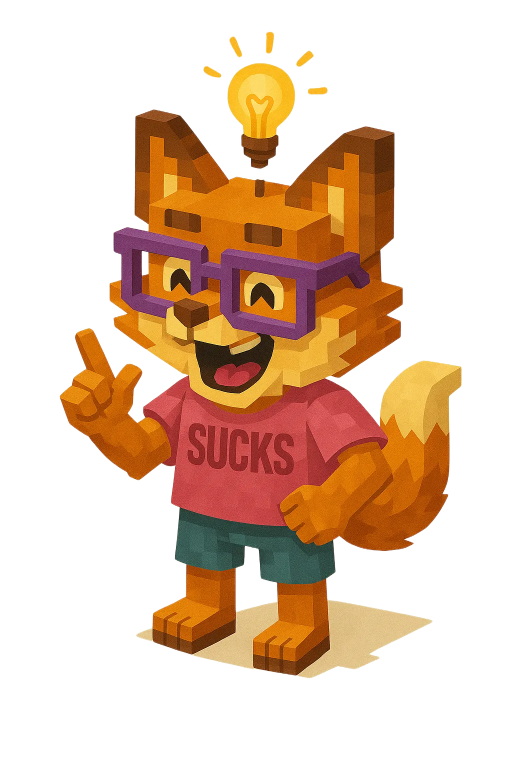 We analyzed 17 startup ideas. The average score is 55/100. But here's what the distribution reveals: 11% score above 70, while 47% score below 50. If you're a founder, you're about to get a crash course in reality from Roasty the Fox, your brutally honest startup critic. This isn't your typical pep talk but a raw, data-backed critique that might just save your business from the startup graveyard.
Imagine hosting a party and half the guests leave early because the entertainment is subpar. That's what 47% of startups are experiencing, ideas that don't even score a 50. These ventures are circling the drain because they're more fantasy than viable business. But the few that do break through the 70 score barrier aren't doing so by sheer luck; they have a mix of practicality and a laser focus on solving real problems.
Let's dive into what's really happening under the entrepreneurial hood and dissect the reasons why some ideas triumph while others crash and burn. From gaming and health to B2B SaaS, each concept presents a unique set of lessons and warnings.
| Startup Name | The Flaw | Roast Score | The Pivot |
|---|---|---|---|
| Interactive Arcade with Scannable Cards | Overbuilt, unvalidated, niche market | 66/100 | Go mobile/web, test with real users |
| Accessible Board Game for Dyslexic Players | Feature, not startup, complex build | 49/100 | Build an app/toolkit for existing games |
| Vibrating Game Board | Science fair project, no market | 39/100 | Focus on accessibility market |
| Sonorium Sensory Memory Game | Educational project, not a business | 44/100 | License concept to a major toy company |
| Uber for Doctors | Regulatory nightmare, not a tech problem | 27/100 | Focus on niche medical use cases |
| Dementia Trivia Console | Overengineered, hard to scale | 56/100 | Software-only app with accessibility peripherals |
| Accessible Brazilian Folklore Boardgame | Hobby project, not scalable | 49/100 | Develop accessibility SDKs for board games |
| Haptic Feedback for Gamers | Hardware grind, niche audience | 81/100 | Software integrations for existing hardware |
| Ergonomic Controller for Muscular Dystrophy | Real pain, but hardware hell | 81/100 | License design to major brands |
| Controller for Partial Tetraplegia | Niche market, high complexity | 62/100 | Partner for modular add-ons or open-source |
The 'Nice-to-Have' Trap
Let's dig into why some of these startups fall flat on their faces. One common red flag is the 'nice-to-have' trap. Startups that focus on features rather than solving real, painful problems are doomed to a life of obscurity. Take Uber for Doctors for example: aiming to match doctors with patients as easily as ridesharing matches drivers with passengers. This idea scored a measly 27/100 because it ignores the terrifying regulatory hurdles of the healthcare industry, not to mention the critical need for trust and continuity in patient care. The pivot here is clear: solve a specific, burning problem in a niche medical sector first.
Accurate Pivoting for Success
Being nimble and identifying a narrow target audience can save you from oblivion. Uber for Doctors' suggested pivot involves focusing on a niche like urgent pediatric teleconsults. This pivot uses existing infrastructure to address a focused need, increasing the chance of regulatory approval while providing tangible value.
The Metric to Watch: If doctor registration drops below a certain threshold.
The Feature to Cut: Remove broad use cases - zero in on specific, underserved needs.
The One Thing to Build: User flow compliance - make sure every step adheres to regulatory requirements.
Why Ambition Won't Save a Bad Revenue Model
Everyone loves a bit of ambition, but when it blinds you to the realities of your revenue model, you'll find yourself sinking rather than swimming. The idea of an Accessible Board Game for Dyslexic Players is as noble as it is naive. It's a hardware-heavy dream without a feasible path to profit. The complexity of custom electronics combined with LED and audio cues, all targeted towards a niche market, is a cost-heavy endeavor that scored 49/100. The revenue model stumbles here: board games are retail-driven and notoriously difficult to scale.
Finding Viable Streams
To transform this from a cash-burning passion project into a viable business, focus on developing a digital overlay or app that can be applied to existing games, cutting down on hardware costs and expanding potential market reach.
The Metric to Watch: Revenue per unit sold - needs to justify production costs.
The Feature to Cut: Ditch the physical board game concept entirely.
The One Thing to Build: A digital toolkit for accessibility in board games.
The Compliance Moat: Boring, but Profitable
Enter the world of startups where profit often comes from addressing boring but essential business hurdles, like compliance. Healthcare and finance sectors are ripe with opportunities for startups that can successfully navigate these tricky waters. Our Patient to Trial AI Matching Tool aimed at helping oncologists score a 62/100 because while the idea is promising, the regulatory environment is a minefield.
Building the Right Foundation
Instead of relying on AI to do the heavy lifting, pivot this idea into a streamlined workflow tool focused on pre-screening patients within regulatory bounds. Automation here can reduce compliance risks and increase adoption rates.
The Metric to Watch: Time saved per screening.
The Feature to Cut: The AI black box.
The One Thing to Build: A user-friendly screening automation tool.
... (continue with more sections in similar format)
Written by David Arnoux.
Connect with them on LinkedIn: Check LinkedIn Profile
Want Your Startup Idea Roasted Next?
Reading about brutal honesty is one thing. Experiencing it is another.